
Supporting Immigrant Students and Families in a Changing Context: Leadership, Belonging, and Community Engagement(Episode 3)
June 2026 | 38:30
As immigration continues to shape school communities, educators are navigating complex and sometimes uncertain policy and social dynamics that shape the experiences of students and families in their school community.
Dr. Daniel Liou, a nationally-recognized advocate for immigrants, joins host Dr. Kathleen King Thorius to share how school and district leaders can create learning environments that are effective, legally grounded, and responsive to the needs of immigrant and newcomer students. Drawing on research and practice, we explore how leaders can engage families, foster belonging, and implement sustainable approaches that uphold access and opportunity for all students.
Podcast: Play in new window
Speakers:
Dr. Kathleen King Thorius
Host of Integration Now and a consultant with MAEC.
Dr. Daniel Liou
Professor at Arizona State University and nationally recognized advocate for immigrants.
Full Transcript:
Ruthie Payno-Simmons:
Hello, and welcome to Integration Now, where we explore how history continues to shape today's integration challenges...and what we can do to advance more equitable outcomes for our students. I am Dr. Ruthie Payno-Simmons, Project Director for the Center for Education Equity, Region III at the Mid Atlantic Equity Consortium. We work alongside schools, districts, and state agencies to face the legacy...
Ruthie Payno-Simmons:
Hello, and welcome to Integration Now, where we explore how history continues to shape today's integration challenges...and what we can do to advance more equitable outcomes for our students. I am Dr. Ruthie Payno-Simmons, Project Director for the Center for Education Equity, Region III at the Mid Atlantic Equity Consortium. We work alongside schools, districts, and state agencies to face the legacy of segregation head-on and turn the promise of integrated public schools into a reality students experience every day.
In today’s episode, we turn to immigration. Educators are navigating complex and sometimes uncertain policy and social dynamics that shape the experiences of students and families in their school communities. For school and district leaders, understanding these realities is key for creating positive conditions for learning, engaging families and communities, and fostering belonging. How can educator leaders proactively support immigrant and newcomer students in ways that are effective, legally grounded, and responsive to the needs of their communities?
Integration Now is hosted by my colleague Dr. Kathleen King Thorius, a leading scholar whose work focuses on dismantling systemic barriers and advancing culturally responsive practices for historically underserved students. She is a professor and has led major equity-focused initiatives, including founding the Great Lakes Equity Center. In this episode, she’s joined by Dr. Daniel Liou, a nationally recognized advocate for immigrants, to explore how schools and districts can create engaging, supportive, and legally grounded learning environments for immigrant and newcomer students.
Let’s get started.
Kathleen King Thorius:
Hi, Dr. Liou. I want to welcome you to this conversation today, and thank you so much for joining me. I am thrilled to spend time with you today talking about how we can support and be in solidarity with our immigrant students and their families in our school communities and beyond. I know you have a lot to share about that, personally and professionally. Thanks for being here.
Daniel Liou:
Thank you so much, Dr. King Thorius, and it's a pleasure to be here, and as a first-generation immigrant myself, growing up in the U.S, and going through U.S. schools, from elementary to high school and throughout college, I can completely relate with some of the issues are still ongoing today, and I'm here to engage with educators across the education pipeline to discuss how we can effectively serve and continue to serve this population. So thank you for having me.
Kathleen King Thorius:
Thank you. And you just alluded to this, Daniel, you know, we are in a changing time, we're in a changing context. There are a lot of uncertainties, there are certainly a lot of fears, and a lot of things happening socially, politically, that have not necessarily been at least as overt in relation to safety, and security of our students and communities, particularly our immigrant students and communities and schools. So as I mentioned when I invited you to join us today, you know, we want to talk about how we support our immigrant students and families in this context, what leadership means now, what belonging means now, and what community engagement means, because immigration continues to shape our school communities. But educators, families, students are navigating these really complex, challenging, and sometimes very uncertain policy and social dynamics. So, we're here to talk about what we know from your scholarship, from your practice, from your lived experience, to support our school district leaders, particularly in K-12 public schools, but beyond, to create inclusive, supportive, and legally grounded learning environments for immigrant and newcomer students.
So I really encourage you to share anything you have to share about… you talked about growing up, but also your experience with school board leadership, your experience as a professor, as a scholar, and as an educator yourself.
Daniel Liou:
It’s important for school leaders to know that anti-immigrant sentiment, typically it happens when there's economic downturns in this country. And so, we can see these types of downturns every 10 years or so, and so these sentiments are nothing new, but they come in cycles and waves. And so it's imperative, like you said, for school leaders to continue to stay committed to this population and how they advance across the educational pipeline.
Kathleen King Thorius:
Yeah, and I think you really kick off, what I was wanting to get to in setting that context to understand how we can support and anticipate support for our immigrant and our newcomer students and families, we have to understand those trends. We have, certainly, this increasingly complex context for immigration in today's particular socio-political climate, and that's one issue, that we do have these patterns, economic patterns, labor patterns, that may predict some of these things. But I'd also like you to build on that, right? So, from your perspective, what feels really important for education leaders to understand right now, about how that dynamic and others are affecting students in school communities? You also talked about the anti-immigrant sentiment that just seems so rampant, and is so rampant.
Daniel Liou:
Well, the fact is, regardless of these ebbs and flows around immigration patterns, as well as anti-immigration sentiments, nationally and locally, there is an ongoing demographic change that's happening across the United States. The most recent UCLA Civil Rights Project, they conducted a national study in the last 10 years or so around the demographic change in America's suburbs, and we know that America's suburbs is becoming even more diverse than ever before. And when I was a faculty at Iowa State University, and previously working with school leaders in the state of Iowa, every town that I used to go to, and it could be the most rural town in Iowa, I always come across with at least one Chinese restaurant and at least one Mexican restaurant. And so, you know, one of the things that we have to take notice is that immigration has been a long and profound history, of our country, and it will continue to be that way.
And having said that, I think it's important to, also not just think about our current context, you know, the social, economic, and political context that you mentioned. I think that particular context is very important. But I also think that those type of understandings needs to be accompanied by understanding the context with which the students and their families are coming from. One of the things that I think is very critical as school leaders continue to do this work is to fully understand this idea of push and pull, meaning what are the, some of the social, economic, and political factors that is driving them to come into the U.S?
I think when it comes to immigration it's very important to think about two very specific type of contexts. The first context is the context of the United States, the social-political context. Some of the policies that are ongoing, some of the norms and sentiments and attitudes and beliefs about immigrants and their existence, in various different communities. That aspect of the social context of educational leadership is something that school leaders need to pay close attention to. The second type of context is the context of the students and their families. It's imperative for school leaders to understand the factors and the drivers and the reasons for why students are and their families are coming into the neighborhood and coming into the United States and living in that specific community, and what are the sort of things that are, you know, attracting them to move into that community. And oftentimes it’s a family network with distance relatives are living in the area or jobs, right, that is attracting a lot of immigrant communities to move into those particular areas. So it's very important to have, for school leaders to be able to have these type of nuanced understanding of the various different contexts. One is the context from above, which is the context of the United States, coupled with our, some of our international policies that may be driving immigrants from -
Kathleen King Thorius:
Mm-hm. Yeah.
Daniel Liou:
- countries outside the United States. And the other is the context from below in terms of what is keeping immigrant communities and what's helping them to thrive in these neighborhoods. And so, when I work with immigrants, I'm very particular in paying attention to knowing whether they're new immigrants or immigrants who have been living in the United States for a long duration of time. Whether they're refugees, whether they're migrants, or any type of, other type of newcomers. It's very important to also have these type of distinctions when we think about context, right? When I was working in high schools, I've had students who were refugees, and they have never had any kind of formal schooling, right? They had spent an enormous amount of time, say, like, 8 years, at a refugee camp at another country before coming into the United States, right? So by the time they get to the high school, you know, they, needed to learn English, but beyond that, they haven't had any kind of formal schooling, right? So, it is very important for, for school leaders to, you know, really pay attention to these type of details, so that we don't have, like, a generalized assumptions about who these immigrants are.
I would have to say that, you know, some immigrants coming into the United States knowing how to speak English, right? And has some socialization about the U.S. society, while others don't, right? And the other thing is the educational level which they're coming with, right? And so, with the example that I just had, with the two students that came to my previous high school without any kind of formal schooling, school leaders, we've had to respond to their education very differently from other students who have had other type of school experiences. And so, for school leaders, that's another thing to pay attention to, is when we're looking at their transcripts, how are we interpreting, you know, their educational levels? How are we interpreting where they should go in terms of course placement, right? What kind of programs should they go into? What kind of support do they need? It requires that level of detail so that we don't, you know, start to conflate the idea that language somehow is a predictor for one's intelligence. That's one thing that happens over and over again in education, is that sometimes we tend to place students who needed language support in remedial courses, for example, or sometimes they get misplaced into special education, thinking that they may have some kind of speech impediment. And so these are all equitable issues that are very significant to school leaders.
Now, I also wanted to add that, you know, regardless of school leaders’, you know, political beliefs, whether we believe in immigration or not, and regardless of our attitudes, it is very important that we pay close attention to laws and policies that governs our school system, right? And so, you know, there are two specific laws that are very historical that I think is very important for our school leaders to continue to stay reminded. First is Lau v. Nichols, Supreme Court decision that insists that immigrant students have an equitable education, and that language does not become a barrier for school, for school leaders and schools to provide comprehensive services and their access to classrooms. And then the second part is the Plyler v. Doe decision, which is another Supreme Court decision that ensures that undocumented students, regardless of student's citizenship status, that they have a right to an education.
Kathleen King Thorius:
Thank you for reminding us that socio-political context is not just from above and outside; it's also sociocultural, and it's from within. Part of understanding complexes is understanding our students and families and really seeking to understand more about their experiences and the diversity of experiences, capacities, and assets and so much that shape, should shape our decisions as leaders. So, a few things you said is understanding, you know, why are immigrant, newcomer, refugees, asylum seekers, migrants, coming – students and families coming to our communities? What's keeping them here? What is helping our students and families to thrive? You raise points about, are they new? Are we talking about new populations? Have these populations, these communities, been with us for longer periods of time? But also previous experiences with formal, informal schooling, and U.S. society, and all of those things often are erased, or, really minimized when we think about or describe immigrant and refugee student experiences as a monolith.
I also really appreciate that point you made about how often, and very unfortunately, there's a conflation by educators and other leaders, of language acquisition and student and family potential or capability. There's been a lot of scholarship and work around that, but that sense that when students come in our doors, we have to take the time to understand their assets, their histories, their community experiences. I cannot overstate the importance of that, and I really appreciate you bringing that to the forefront of this discussion.
Daniel Liou:
You know, I think for some reason, you know, consciously or unconsciously, we have this, as a society, we have this impoverished outlook, of immigrants.
Kathleen King Thorius:
Oh, for sure.
Daniel Liou:
And of especially refugee students. One of the things that I have learned as a school leader for many years is the fact that many of the refugees that we actually serve in our society are, you know, their parents actually are highly educated. We can't just have this large umbrella assumption about who they are, but rather we have to be able to get to know them. I think that's one of the best strategies, but also, read, right, and read research, right, around some of the demographic patterns, getting to know what are some of the facts and figures around who's coming and to where. I think those are, you know, some of the very important markers for understanding the immigrant and refugee students in our community, and, you know, as a way for us to learn how to better serve them.
Kathleen King Thorius:
Absolutely. And, and you kind of moved us toward this discussion around what educators and leaders, whether they're at school levels, district levels, state levels, need to know, legally, need to understand. You said, regardless of political beliefs or attitudes, personally, and I would also say regardless of overwhelming beliefs or attitudes from the communities – you know, you mentioned earlier, we have communities in all parts of the United States where we have many immigrant and refugee students and families moving and coming, and some long-term community members, but those changing demographics are not always met in a welcoming way. And so our school, our district leaders need to be able to understand the law, and also, I would say, take a stance that is backed by what you talked about, understanding Lau v. Nichols, understanding Plyler versus Doe, understanding Title IV around the desegregation of public schools and colleges, so Title IV and the Civil Rights Act of 1964 that requires, essentially, that the federal government guarantees equal protection under the 14th Amendment, regardless of national origin, and that means that students, immigrant and refugee students, students on the basis of language, cannot be segregated on those bases in school buildings, in school districts.
So, I'd like to hear a little bit more. I know you work, you know, you have experience as an educator, as a member of a school board. I'd love to hear a little bit more about that. What advice would you give for educational leaders in developing their stance, their communication in communities, including communities where the overwhelming sentiment may not be welcoming to immigrant and refugee students and their families?
Daniel Liou:
I think it's important to start with the idea that effective school is one where all students are academically and socially successful. Immigration, ZIP code, gender, religion, and other type of statuses do not predict how well students do in school. If we can come from that perspective, then we can assume that school effectiveness and our ability to be effective leaders, you know, our fate is intertwined with how well our community, including our immigrant community, do in school, right? And so, we have to come from this idea of not us versus them. You know, for a long time, there's this narrative that immigrants are strangers and the other, right, that are coming into our community, right? But in fact, you know, I think we need to start thinking as a collective in thinking that we're all in a community together, you know, and that should be a collective leadership stance to draw on.
Inclusivity can mean different things to different people. It could mean that students must assimilate culturally and linguistically into, you know, the norms in the school. It could also mean that, you know, in a very different way where schools are intentionally hiring a diverse staff with language capacity to serve all types of communities, and one where the school curriculum is rich and reflective and representative of the histories and the stories and perspectives of their students, right? I think it's very important for school leaders to start thinking about how to create capacity so that we can ensure that school is effective for everyone. And because, you know, when there's a segment of the community that continue to struggle in school, as an example, then we cannot assume that the school is effective, right? We cannot assume that we have been effectively, you know, running these and managing these schools.
You know, I think from an equity perspective, we have to come from that collective stance. I'll just use one example of what I've seen of a school principal in Oregon. He leads a community that half of the students are immigrants from Southeast Asia. The other half are U.S.-born. And so the school is linguistically and racially and ethnically heterogeneous. Now, what he has intentionally decided to do is in the parent newsletters, he always starts with the Southeast Asian languages at the top of the email that he sends out to parents. And that's his signal to the community to say, “You are just as important as us. You don't need to learn English in order to understand what we're doing as a school Because I'm going to welcome you into our community based on who you are and the languages you speak.” It has helped to create a sense of safety and trust with the community about who this school principal is, and what his commitments are, right? You don't need to be an immigrant school principal to do that. I'm talking about a white male who is intentionally wanting to make sure that the school newsletter is one of the strategies where he communicates that sense of welcoming environment for immigrant families, right?
I've also seen school leaders, who actively partner with local organizations to bring in adults, right? And as a school leader, myself, and later more recently as a school board president, what I have witnessed is the formation of community schools. Now, community schools often means that schools are typically small, but that's not always the case. You can have large, comprehensive high schools that still feel small by the virtue of having local service organizations to come in to co-locate their service within your school to create wraparound services. So, when I was working for, the Richmond District in San Francisco, which is heavily Chinese and Russian and Southeast Asian, what they have done is they have created an after-school program through the city, in the back of George Washington High School called the Beacon Center. And what the Beacon Center has done is provide daytime academic enrichment services to all sorts of students, and through those services, one of our staff speaks Russian, but also all sorts of other type of languages in Central Asia. So he was able to communicate linguistically and culturally with the communities there, right? So, during the daytime, we have these academic enrichment programs, including job training, after-school tutoring. We run a teen center in this heavily immigrant community. And then after school, these Beacon Centers, they offer enrichment programs for the adults. So, a lot of immigrant families, they will come in to, you know, learn English, learn how to work a computer, right? Or they have other type of citizenship courses, where these services become locally situated and highly accessible, where schools become a part of the community, and also vice versa, having the community to be a part of the school. And so, in that case, the school starts to look very differently to the larger community, because it starts to look more like a community center, where everybody has a stake, you know, has a vested interest in coming into the school, either to receive service, but also to pay attention to what's going on in the lives of their students, right?
When I was a bilingual school administrator many years ago, I have also done a lot of home visits. And I think those are another way to help families to feel welcome is not to expect that they will come to you, it's for you to go to them, as a way to extend that welcome, right? And one of the things that I like to do is, a lot of times our language learners programs and multilingual programs needed paraprofessionals. And I would intentionally request the administration to hire our parents to serve as classroom aides, to serve as translators, to help with after-school programs, to run parent advisory councils, and so forth. And these, this is another way to get families involved, right? And in making sure that they have a strong sense of belonging, but also that this is also their school, right? And not just us versus them, but it's about our school as a collective.
Kathleen King Thorius:
I really like how holistic all of those approaches are, Daniel, you know, from communications, which I think the purpose and the intention behind that principal you talked about in Oregon, who deliberately starts and actually emphasizes, prioritizes the languages of the Southeast Asian communities there. That may be something that a school leader may not think about explicitly. They may include all the languages in the community, but actually the emphasis, the prioritization: “you matter as much as we do. You know, we are all one community.” It’s a pretty bold, in a lot of ways, it's a really bold signal.
What I also really appreciate is you talk about how schools can be an extension of a community. If we create space, we create value, we create welcoming atmosphere, but we also create contributions for immigrant, refugee, newcomer students and families during and after school hours. You know, you mentioned that community school approach and the wraparound approach, but you also then talked about the visibility of school leaders being, out and about. Going to homes, going to the stores, being part of, maybe it's worship communities or other important cultural institutions, restaurants that are in the area, you mentioned Chinese restaurant or the Mexican restaurant. Spending time in community, being visible, and demonstrating that a leader values their time with the community, in the community where they lead.
And then finally, seeking contributions from the community that benefit the community members and the school community: students, educators, and everyone. I love that idea that you would do as a former administrator, seeking paraprofessionals, seeking aides from the community. I mean, what better way, and it benefits our students, all our students, when we bring those rich assets and strengths, experiences into our classroom. And it also repositions our immigrant refugee families as knowledgeable, as capable, all those things that you talked about, sometimes we have to counter. So thank you for a really thorough answer. I had hoped we could move to talk about some connections in practice, but you've been giving those all throughout.
I did wonder if you might specifically talk about the now, the ways that we can be building these kinds of relationships and exchanges of assets to better our collective in this time where there is certainly increased and unpredictable enforcement around immigration. We’re seeing, and some of us are experiencing ourselves, students and families experiencing immigration enforcement in ways that is certainly traumatic, certainly inducing fear. So, what might you add to some of those strategies, those approaches, that we should be doing now in contexts where there is fear, there may be hesitation to engage, what can we do? How can we kind of up our approaches in this time?
Daniel Liou:
Well, I think there's several strategies. One is to continue to develop relationship with the community, especially identify community leaders and to really create conditions, for example, schedule meetings in the communities where you have listening sessions to listen to what the parents and family members, you know, what type of support do they need during these difficult times? What are some of the realities that they're seeing on the ground? You know, what are some of the things that students are experiencing when they're outside of school and on the weekends? I think it's very important to have a larger view of the context and what that looks like in the eyes of community members. And so those type of needs assessments need to happen, and I find them the most effective if these meetings can be held in local community spaces where the families are already congregating.
Kathleen King Thorius:
Yes.
Daniel Liou:
For example, previously I've had, I have been very successful in holding family, you know, community advisory, council meetings in local Spanish-speaking churches. And, one of the churches that I used to have a connection with long ago in Northern California, they would host, you know, meetings at nighttime with families and parents, and we would be able to bring the students onto, you know, onto the church premise, and rather than having English-only meetings, we would use Spanish as the lead language, and have English translation, right?
And this is a way for, you know, for families to think, “I can just listen and engage without thinking that I have to somehow learn to translate what the school administrator is saying in these meetings.” Creating these safe spaces, and also expanding these safe spaces from the school into the community is important. That's also another way to build credibility for the school, for the community to be able to see you in these spaces, so that they know that they can trust you, right? I think one of the biggest things right now is whether school administrators could be trusted. And it is very important that communities also learn about Plyler v. Doe, for example, right? To say, you know, as school administrators and as a school community, we're bounded by these laws, and that these laws are something that we have to abide to.
The other thing is, again, going back to communication, most recently, there are some school districts, and I'm, you know, staying a little vague here because of the context that we're in right now, but there are school districts in Arizona that are communicating with their local families and community members to say, “You know what? Regardless of who your kids are and their status, we welcome them.” These are some of the internal communications that is needed at this time. This is certainly not the time to stay quiet or silent or disengage, but rather, we need to step up our efforts to listen to the community, to be able to bring families, leaders, service providers, and school personnel together, to problem solve, and to take perspectives, and to collectively develop strategies on how to respond to the current context, and some of the macro-level policies that is impacting their lives.
Kathleen King Thorius:
Absolutely. You know, you remind me that we have allies, sometimes likely and sometimes unlikely in this work, but we have to be really intentional about fostering those alliances, particularly now. I appreciate your starting the response to that with the importance of understanding needs. Not assuming we know those needs, even if we share some similar experiences or identities. And especially if we don't. It's important that we ask our students, as well as our families: what is it that they want and need from us as leaders, as community leaders, school leaders right now? And then also positioning ourselves alongside, and in many ways, maybe a step behind our communities. You gave that example of the community advisory council meetings, and where you met, and emphasizing Spanish as the primary language of those meetings, with English being interpreted. So all of those things are very concrete, but they also take quite a bit of intentionality.
I'm hoping that, as we have listeners who may be in a very, extremely challenging environment, we may have listeners who are in more welcoming communities that everyone is able to find—I know everyone will be able to find—a set of reflections as well as practices that they can engage moving forward. And I'd just like to ask you to close, if you could speak about what you, I guess, anticipate moving forward. You've been doing this work a long time, you have a history across multiple spheres, in community and educational spaces. How can we continue to prepare for welcoming communities that are responsive to, but also will sustain regardless of, some of the political, particularly social-political challenges we're experiencing now? What do we need to sustain us in this work, and how can we, how can we do that as school leaders?
Daniel Liou:
I think in terms of sustainability, we need to continue to build systems and capacities to serve to heterogeneous populations. I think all schools, regardless of whether you're a rural school, suburban school, or a school in a big city, it's imperative that capacity building in terms of the type of personnel that you have, the type of services that you have co-located within your school, I think those type of systems and structures of support, is sorely needed. And I continue to see schools and school leaders being in these reactionary mode, where there's no bilingual staff on site to help out with crisis or emergencies, and I think it's time for school leaders to think about long-term strategic planning that can pay dividends. The other thing that I think school leaders need to be aware of is that with the current immigration enforcement, our nation's population is dwindling and shrinking, right? This means that eventually schools and school systems will have to shrink as well, because we operate under a per-pupil funding [model]. So, regardless of whether a school leader, regardless of their stance and commitment to immigration and immigrant communities, it's important to know that the survival of schools now is going to largely be dependent on new immigrants coming into the school system, and I believe they are the ones that are gonna keep us sustained.
So, I think sustaining by keeping deep connections with the community is very important. When I teach classes at Arizona State University, sometimes I will refer to certain new communities that are popping up in various different pockets across Arizona. And then my students would be, have no knowledge that, there is now a vibrant Asian community in Mesa, and that there's all these new businesses that have popped up during and after the pandemic. I could see this formula going both ways, where, you know, our ability to sustain ourselves as a system and our services and our commitment to the community is also going to be dependent on their ability to continue to feel like they are safe in our school. You know, there's a literature called Identity-Safe Schools, and I think it's very important for school leaders to start thinking about how to create climates and conditions where identity is not at risk, right?
Kathleen King Thorius:
Yes, yes.
Daniel Liou:
Traditionally, when we think about identity as risk, we are thinking about stereotype threat in the forms of school failure, not doing well in school academically. But now, we have to start thinking about identity as a threat in terms of our assumptions as to who belongs here, who is legal or “undocumented” or however label people want to label our communities, but I think it's important to note that our students come with the same type of aspirations, the same kind of work ethics, the type of dreams, of wanting, you know, success in their lives. And, you know, a lot of the families that I have served over the years, regardless of how impoverished people assume they are, in reality, they are, you know, their lives are enriched by their dreams of being academically, economically, and socially successful in the United States. I think creating that system to support to be able to effectively serve different types of populations, and to ensure that these relationships are sustained through a long, sustained period of time, it's going to be critical to school leaders' ability to sustain their schools.
Kathleen King Thorius:
Thank you for ending with that idea, that our goal as school leaders should align with our communities, our families, our students, and that is academic, social, financial success. And success defined not only by us as leaders, but by the communities we serve. I really appreciate you joining me today, Dr. Liou. I value your perspectives, your scholarship, your experience, professionally and personally, and I know that the listeners for this podcast will benefit from all that you've shared with us today. I wish we had longer, but very much I appreciate your contributions, and thank you for your time today.
Daniel Liou:
Thank you so much, and before I go, I'll just mention a brand new book that just came out last month called Leading for Refugees and Newcomers: Cases for K-12 Schools, and this is a tremendous book. I encourage all school leaders to pick up a copy.
Kathleen King Thorius:
Wonderful. We'll make sure to list that, as well as the other resource you mentioned, Identity-Safe Schools, with the materials that go with this podcast. Thank you so much, Dr. Daniel Liou, and I'm sure we'll be talking soon. Take care.
Daniel Liou:
Thanks for having me. Take care.
Kathleen King Thorius:
You're welcome.
Daniel Liou:
Bye-bye.
Ruthie Payno-Simmons:
Thank you for listening to Integration Now. These conversations remind us that advancing integration takes critical reflection, partnership, and action. If you’d like to continue the conversation or explore how the Region III Equity Assistance Center can support your work, we invite you to connect with us at maec.org.
Until next time.
Additional Resources:
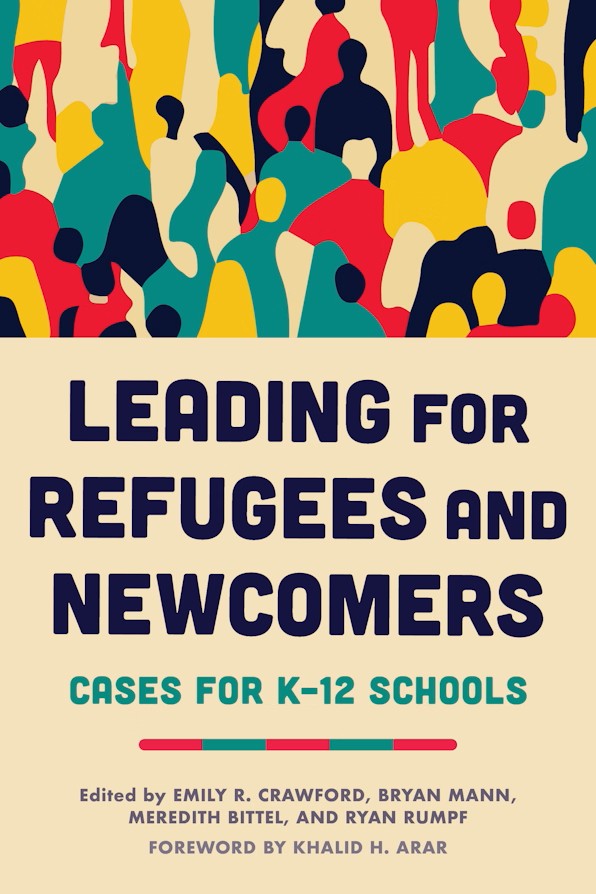
Leading for Refugees and Newcomers: Cases for K-12 Schools
A collection of case studies from K–12 schools that show the many ways in which school leaders and practitioners can support newcomer students.
Recommended by Dr. Daniel Liou in this episode: “I’ll just mention a brand new book that just came out last month called Leading for Refugees and Newcomers: Cases for K-12 Schools, and this is a tremendous book. I encourage all school leaders to pick up a copy.”
Read more
Creating Identity-Safe Schools and Classrooms
This report describes how practitioners can build inclusive and affirming school environments with keen attention to identity safety.
Recommended by Dr. Daniel Liou in this episode: “There’s a literature called Identity-Safe Schools, and I think it’s very important for school leaders to start thinking about how to create climates and conditions where identity is not at risk, right? . . . Traditionally, when we think about identity as risk, we are thinking about stereotype threat in the forms of school failure, not doing well in school academically. But now, we have to start thinking about identity as a threat in terms of our assumptions as to who belongs here, who is legal or ‘undocumented’ or however label people want to label our communities, but I think it’s important to note that our students come with the same type of aspirations, the same kind of work ethics, the type of dreams, of wanting, you know, success in their lives.”
Read more
